
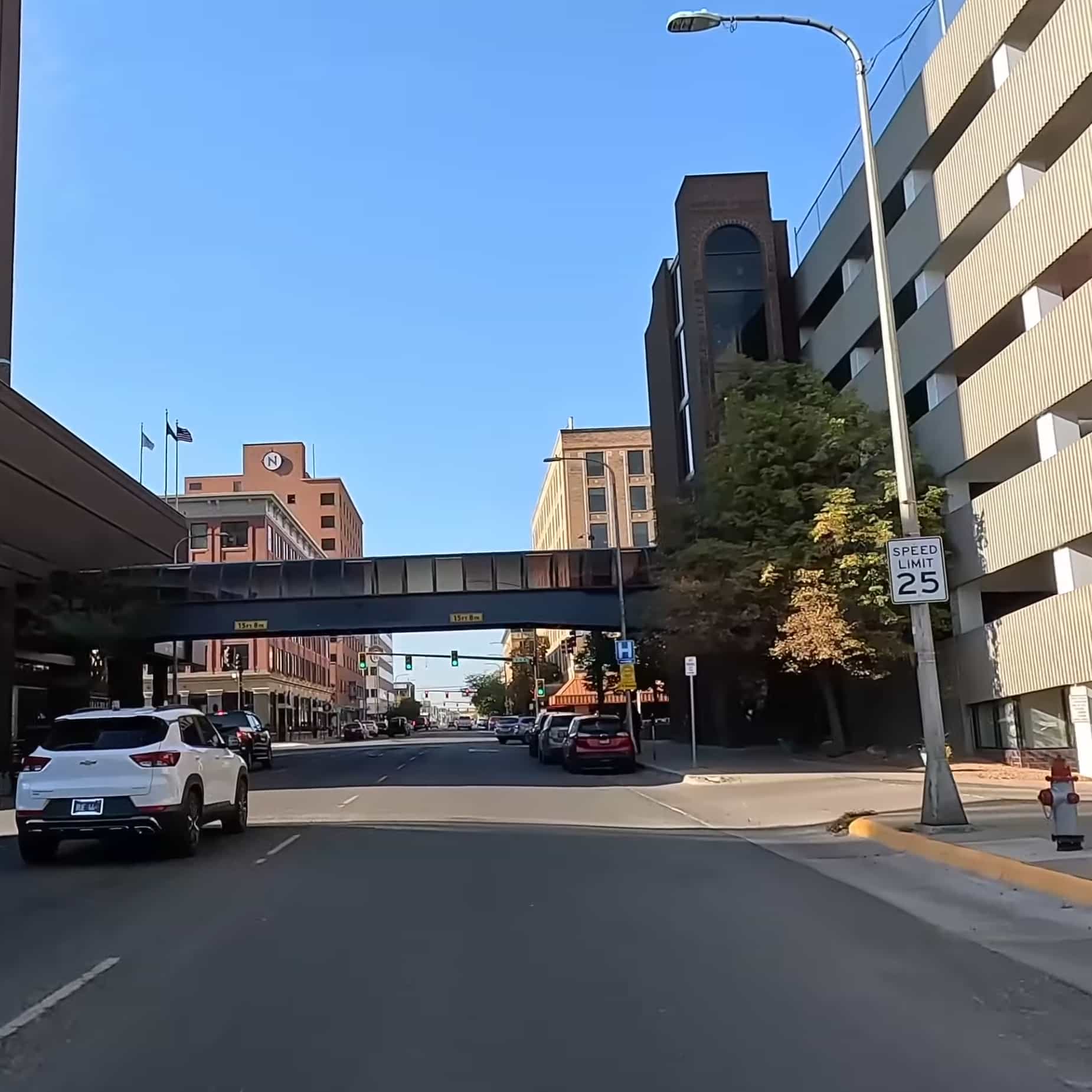

Long before Downtown Billings became a place for restaurants, breweries, museums, and hotels, it was a bet on a railroad. The city grew so quickly that people began calling it the “Magic City.”
There is a moment in the history of many American cities when geography stops being destiny.
A place that had been little more than open land suddenly becomes a destination. A track is laid. A depot appears. Workers arrive. Businesses follow. Hotels are built for people who were not there the week before. Streets fill with stores, offices, saloons, restaurants, and the noise of a town that has suddenly discovered its future.
That is how Billings began.
Today, visitors searching for Downtown Hotels in Billings encounter a compact urban center with historic buildings, restaurants, breweries, cultural venues, and the familiar rhythm of a Montana city. But the downtown they see is, in many ways, the surviving result of a 19th-century transportation revolution.
The railroad did not simply pass through Billings. It created the city.
Before the Downtown, There Was the Railroad
Billings was founded in 1882 as a railroad town by the Northern Pacific Railroad. The city was named after Frederick H. Billings, a former president of the railroad, and its rapid growth soon earned it a nickname that sounds almost too ambitious for a settlement on the Montana prairie: the “Magic City.”
The name was not entirely poetic.
Billings grew with remarkable speed. The arrival of the railroad transformed the location into a commercial center, bringing people, goods, investment, and a reason for businesses to establish themselves there. The city became an important point in a much larger network connecting the interior West to the rest of the country.
The logic of the new city was simple.
The trains arrived. People needed somewhere to sleep.
They needed food, supplies, offices, shops and places to conduct business. The businesses needed employees. The employees needed homes. The railroad created movement, and movement created demand.
Downtown Billings grew out of that demand.
Montana Avenue Became the City’s First Main Street
The story of Downtown Billings history is inseparable from Montana Avenue.
The avenue developed alongside the railroad and quickly became one of the city’s commercial centers. Hotels, shops and offices appeared along the route, serving a growing population and the constant flow of people arriving by train. The railroad was not a distant piece of infrastructure at the edge of town. It was part of everyday life.
For an American city built in the railroad era, this was a familiar pattern. But Billings had an advantage: it was positioned to serve a much larger region than the city itself.
Its importance extended beyond its own population.
The city became a commercial and distribution center for a broad area of Montana and neighboring states. That regional role helped give Billings a scale and importance that its relatively remote location might not otherwise have produced.
This is one reason the modern downtown can feel different from the centers of larger American cities.
Billings was never built as a miniature New York or Chicago. Its downtown grew from the practical needs of a frontier commercial hub.
The result is a city center shaped less by skyscrapers than by the accumulated layers of commerce, transportation and local history.
The Hotels Arrived Because the Travelers Did
There is a direct connection between the history of Downtown Billings and the history of its hotels.
In the early years, travelers did not arrive with a hotel reservation made months in advance on a phone. They arrived by train.
The hotel was part of the infrastructure of the city.
A visitor stepping off the train needed a room. A salesman traveling across the region needed somewhere to stay. A rancher arriving in town for business needed food and accommodation. A new arrival might need to stay for days or weeks while arranging the next stage of life in the growing West.
The historic hotels that appeared along and near Montana Avenue were therefore not simply businesses. They were part of the machinery of urban growth.
Some of the early hotels have disappeared. Others remain part of the historic fabric of the area. The brick buildings that survived help explain why parts of Downtown Billings still feel connected to the city’s first decades rather than designed entirely for the present day.
That history is still relevant to travelers choosing where to stay.
A modern downtown hotel in Billings may offer Wi-Fi, meeting rooms, fitness facilities and contemporary comforts. But the reason the hotel is there in the first place goes back to a much older question:
Where do people stay when a city is being built around movement?
Billings Was Built Fast – It Also Had to Rebuild
The early city was not protected from the dangers of frontier life.
Fire was a constant threat in communities where wooden buildings, crowded commercial blocks and limited firefighting infrastructure could turn a local accident into a disaster. Downtown Billings experienced several major fires during its early years.
In 1883, an entire block of Montana Avenue burned. In 1885, a fire at the Farmer’s Hotel destroyed numerous buildings, including the offices of The Billings Gazette. Then, in 1890, another major fire destroyed the Headquarters Hotel, the old depot and a telegraph office.
The significance of these fires is not only that buildings were lost.
It is that the city continued.
Billings was still young, but its commercial momentum was already strong enough to encourage rebuilding. The same forces that had created the town — transportation, trade and regional commerce — continued to pull people and investment toward it.
The city was not simply growing.
It was learning how to survive growth.
The Railroad Became More Than a Means of Transportation
By the beginning of the 20th century, the railroad had become central to Billings’ identity.
The Billings Depot, completed in 1909, was built to serve three railroad companies: Northern Pacific, Great Northern, and Chicago, Burlington and Quincy. Its scale reflected the growing importance of the city. The depot complex became a significant part of the townsite district, which was later placed on the National Register of Historic Places.
The numbers tell part of the story.
By 1914, thousands of homesteaders had passed through the Billings land office, many arriving by rail. The tracks extended in multiple directions, and the city was becoming a gateway to a much larger landscape.
For visitors today, the historic depot can seem like a preserved relic.
In its own time, it was something else entirely.
It was a machine for bringing the outside world into Billings.
When the Trains Began to Disappear
The relationship between Billings and the railroad eventually changed.
Highways and air travel reduced the importance of passenger trains. The last regular Amtrak passenger train left the Billings Depot in 1979. As rail travel declined, buildings in the depot area were left vacant and began to deteriorate.
This was the point at which many downtowns across America faced a difficult question.
What happens when the economic force that created the city no longer plays the same role?
For Billings, the answer was not immediate.
The old downtown entered a period of decline. Buildings that had once been symbols of growth became reminders of a different era. But the history of the city did not disappear simply because the trains became less important.
Eventually, preservation and revitalization efforts began to give parts of the historic center a new future.
The old buildings could serve a different economy.
Restaurants replaced some old commercial uses. Galleries, breweries and cultural venues helped bring activity back to the streets. Historic spaces became part of a downtown that was no longer built around passengers waiting for a train, but around visitors choosing to spend time in the city.
Downtown Billings Is Still Being Rewritten
This is perhaps the most interesting thing about Downtown Billings.
Its history is not a straight line from railroad boom to historic preservation.
It is a series of reinventions.
First came the railroad town. Then came the commercial center. Then came the period when the old transportation system lost much of its importance. Later came efforts to preserve and revive the historic core.
The downtown of today is therefore neither entirely old nor entirely new.
A visitor can walk through a district shaped by the railroad, enter a historic building, eat in a contemporary restaurant, visit a museum, and continue through streets whose importance began more than a century ago.
That mixture is what gives the center of Billings its particular character.
It is not a museum frozen in time.
It is a working downtown that has repeatedly found new uses for its past.
Why the Railroad Story Still Matters to Hotel Guests
For travelers, history can sometimes seem like background information — something to read after deciding where to stay.
In Billings, the relationship is more direct.
The location of the downtown itself is part of the story. The concentration of historic buildings, hotels, restaurants and cultural venues reflects the city’s original role as a place where people arrived, stopped, traded and continued onward.
That makes Downtown Hotels in Billings more than a convenient choice for a night between road trips.
A downtown stay places visitors in the part of the city where Billings’ transformation is easiest to understand. The railroad may no longer bring crowds of passengers to the depot every day, but the basic idea remains remarkably similar.
People still arrive in Billings.
They still need a place to stay.
And the city is still serving as a gateway to the wider landscape of Montana.
The difference is that today’s travelers may be heading toward Yellowstone National Park, the Beartooth Highway, Little Bighorn Battlefield or the open roads beyond the city rather than boarding a train bound for somewhere else.
The journey has changed.
The reason to stop in Billings has not disappeared.
The Railroad Built the City – Downtown Kept the Memory
The nickname “Magic City” was born from speed. Billings seemed to appear almost overnight, growing at a pace that astonished the people watching it happen.
But cities built quickly do not always remain interesting.
What makes Downtown Billings worth exploring today is that the original story has not been completely erased. The historic buildings, the old railroad landscape and the surviving street pattern continue to reveal how the city began.
The modern visitor may arrive by car or plane. The hotel may be contemporary. The restaurants and cultural venues may belong to a new generation.
But underneath it all is the same old geography.
A railroad arrived. A city followed.
And more than a century later, Downtown Billings is still living with — and building on — the consequences of that original decision.
Downtown Hotels
Photo: YouTube printscreen
0 Comment