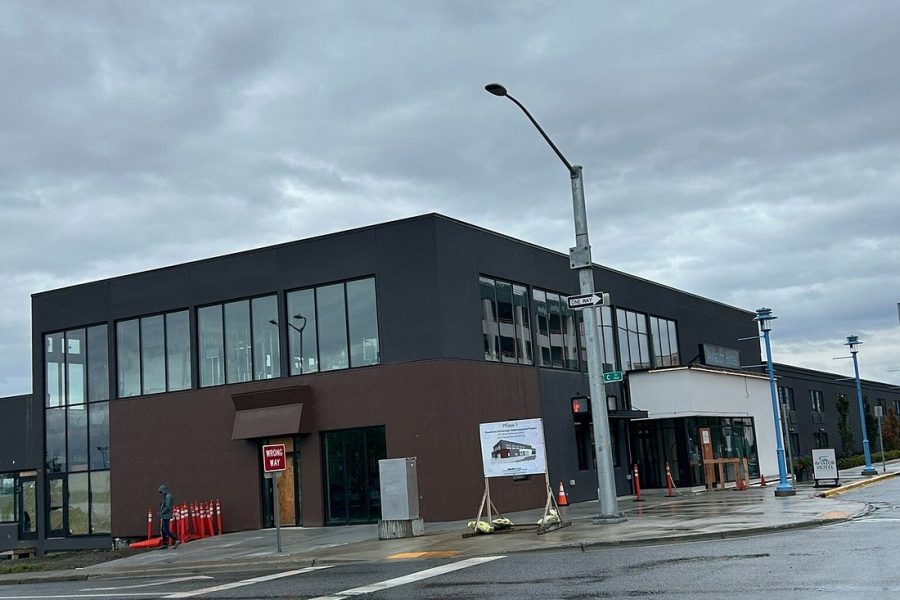
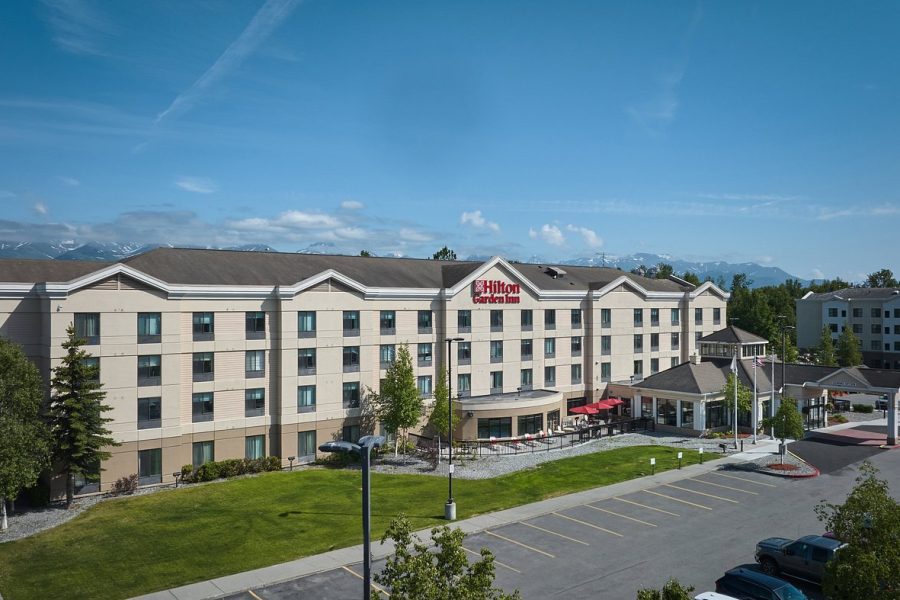
Downtown Anchorage sits between the waterfront and the city grid, with most hotels clustered around 4th and 5th Avenue.
What It’s Like in Downtown Anchorage
Downtown Anchorage is arranged around a compact grid between 4th and 5th Avenue, where most hotels and commercial buildings are clustered within a few blocks. The area sits between the waterfront edge and the broader residential layout of the city, with no strong separation between districts the way larger cities have. Activity is concentrated along a small number of streets, while surrounding blocks quickly shift into quieter, more dispersed urban fabric. The result is a downtown that feels tightly contained rather than layered, with most movement staying within a limited central corridor.
Downtown Anchorage functions as a compact rectilinear grid bounded roughly by 4th Avenue and 5th Avenue, with its densest built fabric concentrated between C Street and A Street. The street network is uniform in geometry, but land use is distributed unevenly at the block scale, producing distinct shifts in function across very short distances rather than continuous zoning bands.
The primary east–west spine is 4th Avenue, which carries the highest concentration of pedestrian movement, transit stops, and mixed-use frontage. This corridor connects directly toward the Cook Inlet edge, where the grid terminates into port infrastructure, surface parking, and open transitional land. In the opposite direction, toward 5th Avenue, the street pattern remains regular but transitions quickly into civic, administrative, and lower-intensity office functions within a few blocks.
North–south streets operate as structural separators within the grid rather than continuous commercial corridors. C Street, I Street, and A Street define functional edges where land use changes abruptly at intersections rather than gradually along corridors. Within these boundaries, individual blocks alternate between active hotel and retail frontage, parking structures, institutional buildings, and low-activation parcels, creating a patchwork of intensity rather than a continuous downtown fabric.
At the block level, continuity is primarily geometric rather than functional. The orthogonal grid remains intact across the entire core, but pedestrian activation is concentrated in discrete segments aligned with 4th Avenue and select intersecting nodes. Outside of these segments, the same grid structure persists, but with reduced program density and intermittent frontage activation, producing a clear separation between spatial order and functional use.
Watch Real Videos of Downtown Hotels in Anchorage
How Activity Changes Across Downtown Anchorage
Downtown Anchorage does not form a continuous zone of equal intensity. Around 4th Avenue, movement is concentrated in short stretches where hotel entrances, small storefronts, and transit stops align along the same blocks. These sections carry most of the pedestrian flow, especially during working hours.
One or two blocks away, the street pattern remains unchanged, but the function shifts. Office buildings and parking structures begin to replace continuous retail frontage, and some intersections act more as crossings than destinations. The physical grid continues, but the use of space becomes fragmented across adjacent blocks.
Further along the same streets, pedestrian presence becomes intermittent. Some blocks maintain activity due to isolated commercial units, while others are defined by gaps in building frontage and non-active edges. The transition is not marked, but visible in how frequently people actually move through each segment of the grid.
Downtown Hotels in Anchorage – Frequently Asked Questions
Downtown Anchorage is effectively split into a few short north–south segments between C Street and A Street. Within this range, 4th and 5th Avenue act as the main horizontal structure, while everything else is defined at the block level rather than as named districts.
Because land use is assigned at the block scale rather than forming large continuous zones. A single intersection can separate a hotel cluster from a parking structure or institutional building, even though the street grid remains identical.
The geometric grid continues, but functional density drops. Blocks transition into surface parking, administrative buildings, and lower-activity uses, reducing continuous pedestrian movement.
No formal boundaries exist. Instead, transitions occur at intersections where building function changes abruptly from one block to the next, without gradual zoning shifts.
Along 4th Avenue, activity is not continuous. Some blocks contain hotel entrances, transit stops, and active storefronts, while adjacent blocks shift into quieter frontage or service-oriented buildings before activity resumes again.
Hotel concentration is strongest in the central portion of the grid between C Street and E Street, primarily aligned with 4th Avenue. Outside this band, hotel presence becomes more isolated and mixed with other building types.
5th Avenue maintains the same street geometry but carries less continuous pedestrian flow. It functions more as a parallel service and access route rather than the main active corridor of downtown.
Because spatial continuity is high (same grid throughout), but functional continuity is low. Movement follows the street pattern, yet activity appears in separated pockets rather than evenly distributed corridors.
Seasonal Patterns in Downtown Anchorage
Downtown Anchorage changes in how it is used across seasons, even though the street grid itself remains unchanged. The variation is less about the physical layout and more about how different blocks along 4th and 5th Avenue are actually occupied and circulated through during the year.
In summer, activity spreads more evenly along the central corridor between C Street and E Street. Outdoor seating areas around places like Glacier Brewhouse and 49th State Brewing tend to extend the usable street space, pulling pedestrian movement slightly beyond the immediate hotel cluster. The blocks around Town Square Park and the Anchorage Museum also see more consistent flow, linking cultural points with nearby hotels and transit stops.
Spring maintains the same structure but with more uneven use of space. The 4th Avenue corridor remains the most consistent line of movement, while side streets such as I Street and K Street see more intermittent activity depending on weather and time of day. Indoor locations like Midtown-focused cafes and retail spots begin to reintroduce steady foot traffic back into the grid after winter conditions.
In autumn, movement contracts again toward the most direct east–west routes. The central stretch of 4th Avenue and selected intersections near C Street become the primary connectors between hotel clusters and dining spots, while peripheral blocks toward A Street and the edges of the downtown core become less frequently used outside of peak hours.
Winter shifts circulation further inward. Activity concentrates around enclosed venues and a smaller set of reliable destinations, including main corridors with direct hotel access and a few year-round restaurants such as Simon & Seafort’s and Snow City Cafe. Side streets and secondary blocks lose continuity of use, creating a more segmented pattern of movement within the same physical grid.