
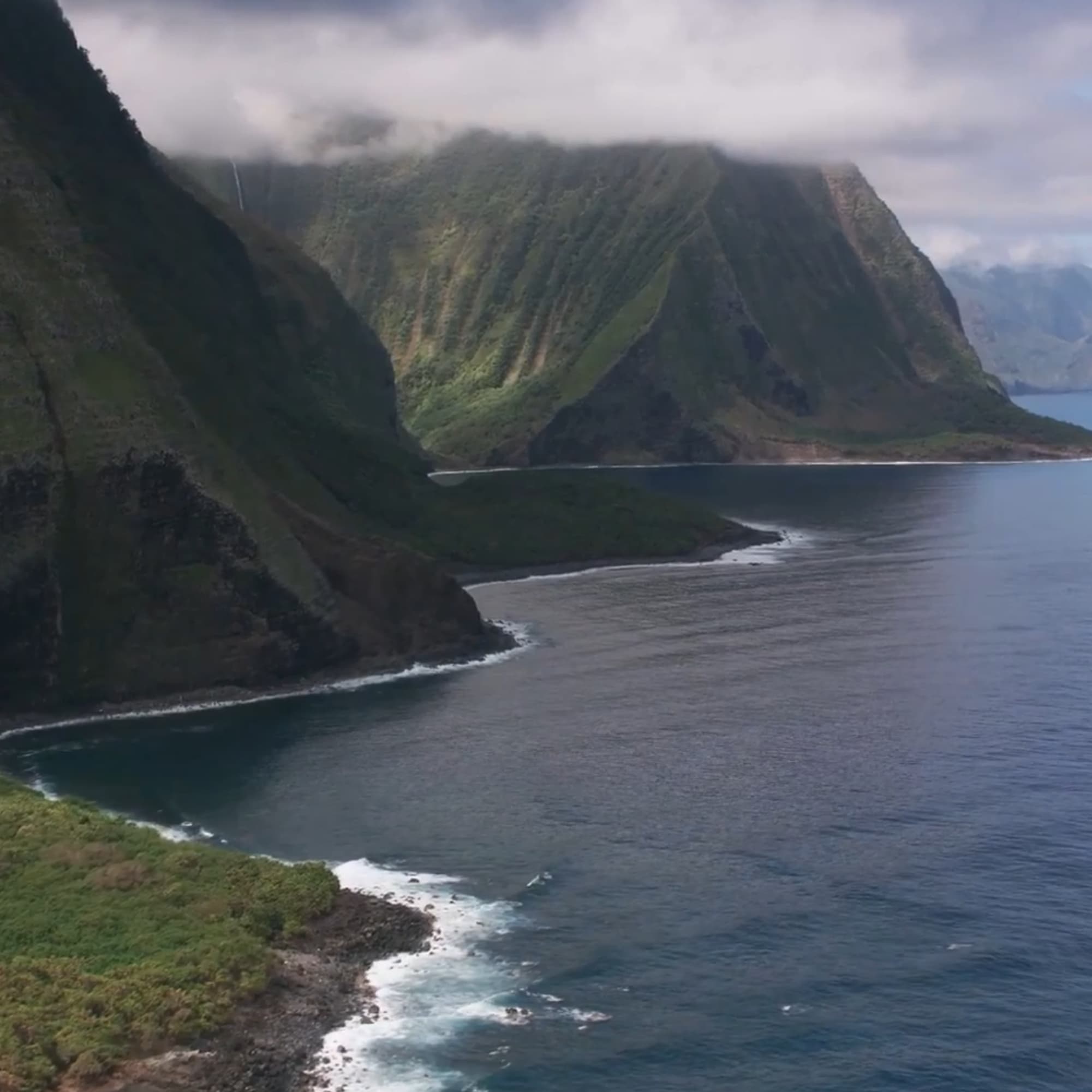

For more than five years, one of Hawaii’s most remote and emotionally powerful historic sites remained closed to visitors. Hidden on the rugged northern coast of Molokaʻi, Kalaupapa has now quietly reopened, offering extremely limited access through guided tours that reveal one of the most complex chapters in American and Hawaiian history.
Unlike typical tourist destinations in Hawaii, Kalaupapa is not a place of leisure. It is a preserved settlement shaped by isolation, survival, and memory. The reopening does not signal a return to mass tourism, but rather a carefully controlled opportunity to engage with a place where history is still deeply present.
A Place Shaped by Isolation and Geography
Kalaupapa is located on a narrow peninsula surrounded by some of the tallest sea cliffs in the world, rising dramatically nearly 3,000 feet above the ocean. This natural barrier made the area both physically stunning and historically significant—it was nearly impossible to access, and even harder to leave.
In the 19th century, the Hawaiian Kingdom established Kalaupapa as a place of forced isolation for people diagnosed with Hansen’s disease, also known as leprosy. At the time, little was understood about the illness, and fear led to policies that separated thousands of people from their families and communities.
Over the decades, more than 8,000 individuals, many of them Native Hawaiians, lived and died in Kalaupapa. The settlement became both a place of hardship and a tightly connected community where residents built lives under extraordinary circumstances.
Life Behind the Sea Cliffs
Despite its tragic origins, Kalaupapa was never only defined by suffering. Over time, it developed into a functioning town with homes, schools, churches, and everyday social life. People who were sent there often spent the rest of their lives in the settlement, forming bonds that replaced the families they had been forced to leave behind.
When effective treatment for Hansen’s disease finally emerged in the mid-20th century, forced isolation ended in 1969. Residents were given the choice to leave or stay, and many chose to remain in the only home they had known for decades. Today, only a small number of former patients still live there, carrying forward the memory of the community.
A New Kind of Visit: Limited, Guided, and Reflective
Kalaupapa’s reopening comes with strict limitations. Access is only possible through guided tours, and visitor numbers are extremely small. The goal is not to turn the site into a commercial attraction, but to preserve its dignity while allowing carefully managed educational visits.
The experience is designed to be immersive and reflective. Visitors travel by air from Oʻahu to Molokaʻi, then continue into the peninsula where they walk through historic locations, cemeteries, and remnants of the original settlement. The setting itself plays a central role—quiet, isolated, and surrounded by ocean and cliffs that reinforce the feeling of separation.
Rather than focusing solely on historical facts, the tour emphasizes personal stories, community memory, and the human experience of those who lived there.
Between Beauty and Memory
One of the most striking aspects of Kalaupapa is the contrast it creates. The landscape is undeniably beautiful—dramatic cliffs, open ocean views, and a sense of untouched nature. Yet this beauty exists alongside a history marked by loss and separation.
Visitors often describe the experience as emotionally complex: a place where peaceful surroundings meet deeply serious history. It is this duality that defines Kalaupapa today. It is not a forgotten site, but a living reminder of how policy, fear, and human resilience intersected in one isolated place.
A Site That Demands Respect, Not Just Tourism
Unlike most destinations in Hawaii, Kalaupapa is not built for casual travel. Its reopening reflects a careful balance between preservation, education, and respect for those who lived there.
The limited access ensures that the site remains protected, both physically and emotionally. It also allows the stories of former residents to remain central, rather than being overshadowed by tourism.
Kalaupapa stands today as a reminder that some places are not meant to be consumed quickly, but understood slowly. Its return to the visitor map is not about increasing tourism in Hawaii—it is about preserving memory in one of the most isolated corners of the islands.
Downtown Hotels
Photo: YouTube printscreen
0 Comment