Downtown Hotels in Omaha

Omaha’s downtown brings together historic brick streets, modern towers, the Missouri River, and the unhurried confidence of Nebraska’s largest city.

Best Downtown Hotels in Omaha

Omaha does not try particularly hard to impress you, and that may be part of its appeal. Nebraska’s largest city has grown into an important business and cultural center while keeping the scale and rhythm of a Midwestern city. Downtown Omaha brings together old warehouses and new development, corporate offices and independent restaurants, major event venues and quiet streets that still reveal traces of the city’s railroad past.

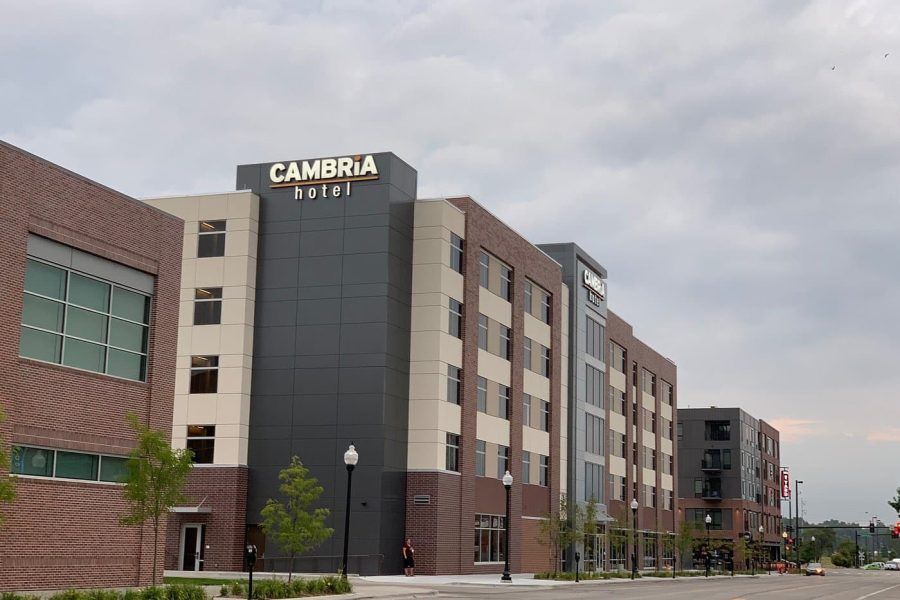
Cambria Hotel Omaha Downtown

740 N 14th St, Omaha, NE 68102, USA

Downtown Omaha: A City Center With Its Own Rhythm

Downtown Omaha is not a district built around a single landmark. Its character comes from the way several different parts of the city center fit together. The historic Old Market sits at its heart, while office towers, hotels, convention spaces, entertainment venues, parks, and the riverfront extend the downtown experience in different directions. The result is a city center that feels substantial without becoming overwhelming.

The Old Market is the part of downtown most visitors notice first. Its nineteenth-century brick buildings, narrow streets, storefronts, restaurants, galleries, and bars give the area a texture that newer developments cannot easily reproduce. It is lively without feeling like a theme park, and its relationship with the surrounding downtown makes it more than simply a historic quarter. Walk a few blocks and the atmosphere changes from old warehouse facades to modern offices, hotels, and public spaces.

Omaha’s downtown also has a strong connection to the Missouri River. The river helped shape the city long before the modern skyline appeared, and the recent transformation of the riverfront has made that relationship much more visible. The RiverFront parks provide open space between downtown and the water, giving the center of the city somewhere to slow down. The Bob Kerrey Pedestrian Bridge adds another distinctive element, crossing the Missouri toward Council Bluffs, Iowa.

That combination of history, business, entertainment, and open space is what makes downtown Omaha interesting. It is a place where a visitor can spend the morning walking through the Old Market, have lunch downtown, attend a concert or sporting event in the evening, and still find a quiet stretch of park or riverfront without leaving the central city.

For visitors, downtown is one of the easiest places to experience Omaha as a city rather than simply as a collection of attractions. Many of the places visitors come to see are within a relatively compact central area, while the surrounding neighborhoods and suburbs are easy to reach when a longer stay calls for exploring beyond downtown.

Omaha’s appeal is ultimately less about spectacle than about balance. It has the infrastructure of a major American city, but downtown still retains the feeling of a place where different parts of urban life remain within walking distance of one another. That makes the center of Omaha particularly well suited to travelers who prefer discovering a city gradually, one street, restaurant, building, and public space at a time.

See Inside: Downtown Omaha Hotels Worth a Look

Did You Know?

Omaha’s downtown reaches all the way to the Missouri River, where the Bob Kerrey Pedestrian Bridge connects Nebraska with Council Bluffs, Iowa—making it possible to walk from one state to another.

Downtown Hotels in Omaha – Frequently Asked Questions

The area around the Old Market, the central business district, and the RiverFront is the clearest expression of downtown Omaha. Within a relatively small area, the city shifts from nineteenth-century brick warehouses to office towers, hotels, restaurants, parks, and the Missouri River.

The Old Market did not begin as an entertainment area. Its character comes from its original warehouse buildings and older street layout, many of which were preserved as the neighborhood changed. Today, restaurants, bars, galleries, and independent shops occupy those historic spaces.

The Bob Kerrey Pedestrian Bridge crosses the Missouri River between Omaha and Council Bluffs, Iowa. It is more than a bridge for pedestrians and cyclists: it has become one of the most recognizable pieces of Omaha’s riverfront and offers an unusual view back toward the downtown skyline.

Rather than treating downtown as a checklist of attractions, start in the Old Market and walk toward the river. Along the way, you get a sense of how Omaha changed from a railroad and warehouse city into a modern regional center without completely erasing its older architecture.

Yes. The Old Market and the RiverFront are close enough to connect naturally on foot. The walk takes you through some of the most recently redeveloped parts of downtown, including the public parks along the river.

The central downtown area around the Old Market and RiverFront is the most practical choice. From there, several of Omaha’s main downtown destinations can be reached on foot, while attractions farther away can be handled by car or rideshare.

Not anymore, and that is part of what makes the area interesting. Downtown still has a strong business presence, but hotels, restaurants, entertainment venues, residential buildings, public parks, and the revitalized riverfront have made the center considerably more active outside traditional office hours.

For a short visit, downtown can save time because several very different sides of Omaha are concentrated nearby. You can have breakfast in the Old Market, spend time along the RiverFront, attend an event downtown, and finish the evening at a restaurant or bar without turning every part of the day into a drive.

Omaha on Screen and in the American Imagination

Omaha has never been one of the usual Hollywood stand-ins for America. That is precisely what makes its appearances in popular culture interesting. The city has often been used to represent something more understated: the ordinary American life that exists beyond the mythology of New York, Los Angeles, or Chicago.

One of the most memorable examples is Alexander Payne’s 2002 film About Schmidt. Payne, who was born in Omaha, filmed much of the movie in Nebraska, and the landscape of Omaha and its surroundings becomes an important part of the story. Jack Nicholson’s Warren Schmidt moves through a world of office buildings, highways, modest homes, hotels, and everyday Midwestern spaces. The city is not presented as a postcard destination; it is presented as a place where a person’s entire life can unfold.

Omaha also occupies a different kind of place in American culture through Warren Buffett, whose Berkshire Hathaway headquarters are in the city. His annual shareholder meeting has helped give Omaha an unlikely global profile, bringing investors and business journalists from around the world to a city better known for its pragmatism than for financial spectacle.

Between Hollywood, the stock market, and the music scene that has produced acts such as Bright Eyes and The Faint, Omaha has quietly developed a cultural identity of its own. It is rarely the loudest city in the room—but it has become one of those American cities that people tend to remember once they have spent some time there.

Like Downtown Omaha? Explore Downtown Des Moines Next

Just a few hours east of Omaha, Des Moines offers another distinctly Midwestern downtown, with a walkable city center, riverfront parks, restaurants, and a growing mix of hotels.

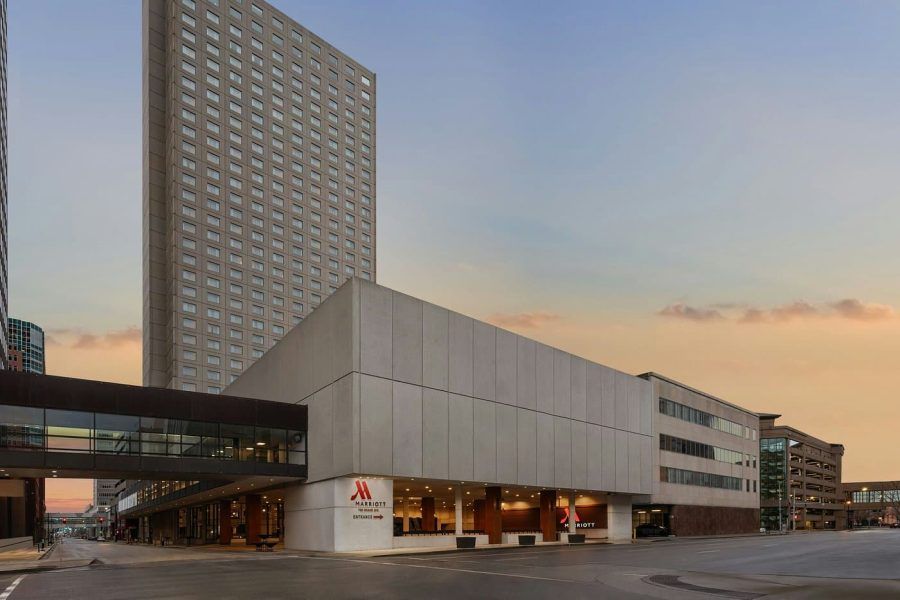
Des Moines Marriott Downtown

700 Grand Ave, Des Moines, IA 50309, USA

Explore More Downtown Hotels Across the Midwest Plains